After more than two decades in Finance, I have seen Controlling at its best — and at its most underutilized.
Some teams deliver accurate reports and sophisticated forecasts, yet have limited influence on business decisions. Others help shape those decisions and their economic outcomes.
What makes the difference?
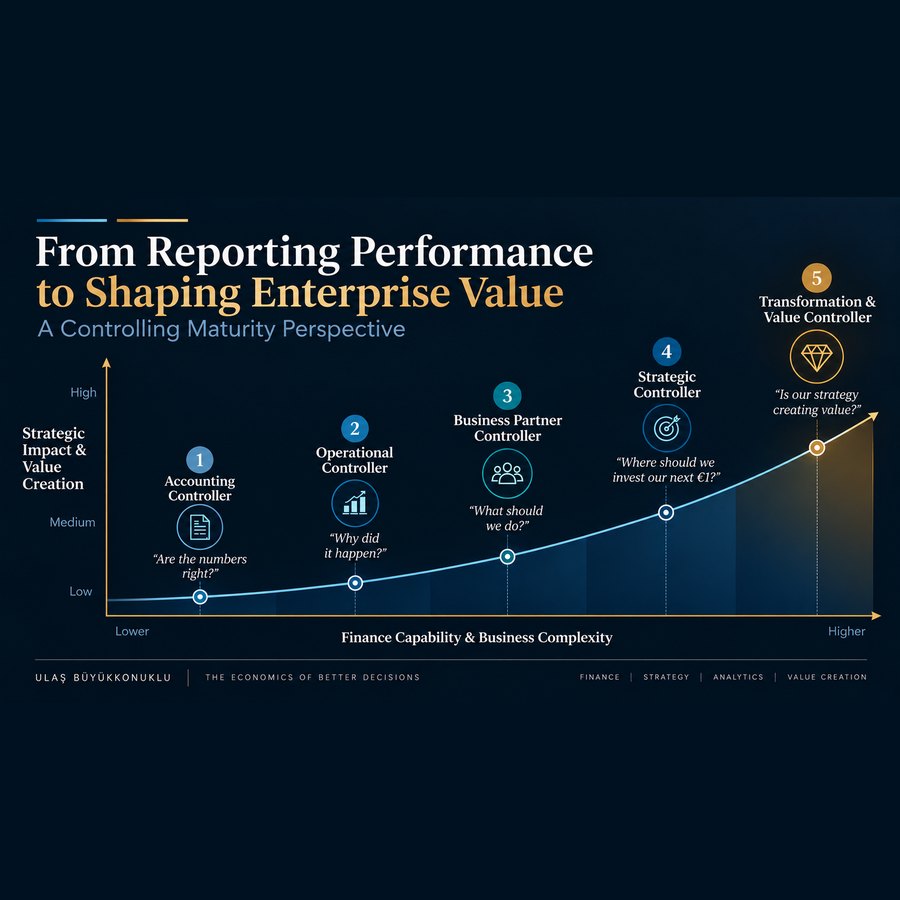
I see the evolution through five maturity levels:
Level 1 — Accounting Controller
Financial Reliability | Are the numbers right?
Closing, reporting, controls and compliance. The essential foundation of financial trust.
Level 2 — Operational Controller
Performance Insight | Why did it happen?
Forecasting, variance analysis and KPIs. Finance explains the drivers behind performance.
Level 3 — Business Partner Controller
Decision Influence | What should we do?
Finance challenges assumptions and works with commercial and operational teams to turn insights into decisions.
Level 4 — Strategic Controller
Capital Allocation | Where should we invest our next €1?
Investment choices, cash generation and capital efficiency. Not every profitable growth opportunity creates economic value.
Level 5 — Transformation & Value Controller
Enterprise Value Creation | Is our strategy creating value?
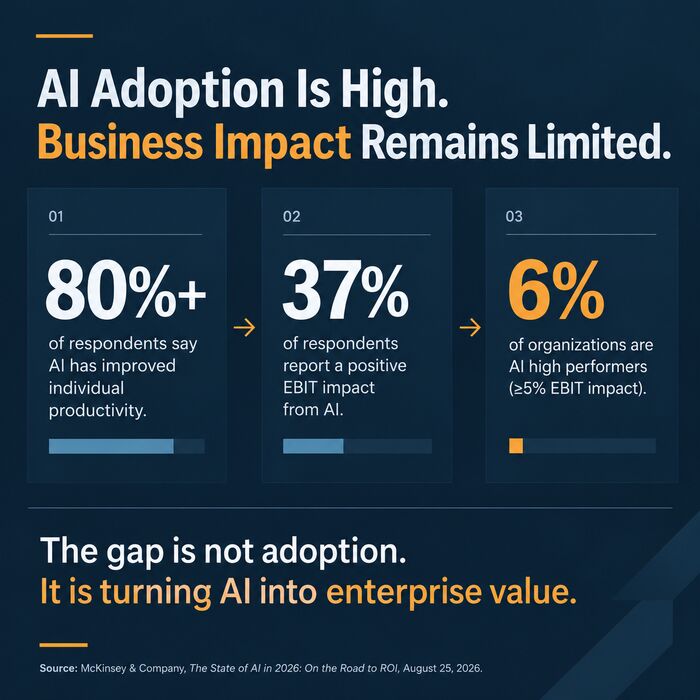
Finance connects transformation, analytics, AI and commercial initiatives with measurable financial outcomes.
Maturity is cumulative, not substitutive.
Higher levels do not replace financial discipline. They build on it.
EY's Global DNA of the Financial Controller Survey 2024 discusses the shift from value protection toward value creation.
Deloitte similarly highlights the expansion from Steward and Operator toward Strategist and Catalyst.
For CFOs, the challenge is therefore not simply improving reporting efficiency, but building Finance teams capable of influencing commercial decisions, capital allocation and transformation outcomes.
The inspiration behind the curve
Years ago, I came across a Pricing Maturity Curve. Its connection between organizational capabilities and value creation stayed with me.
Inspired by that concept, I developed this Controlling Maturity Curve based on my experience across Finance, Pricing and Advanced Analytics.
It is my perspective, not a standardized academic model.
Would you structure these five levels differently?