In my recent posts, I focused on the journey from profitable growth to cash generation — and on how averages can hide where cash is actually trapped.
But once we identify where cash is being created or consumed, a deeper question emerges:
Which customers actually create economic value?
Revenue is an obvious starting point.
Margin takes us one step further.
But neither necessarily tells us the full economic value of a customer.
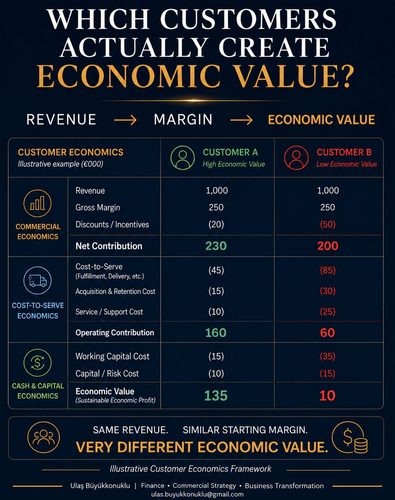
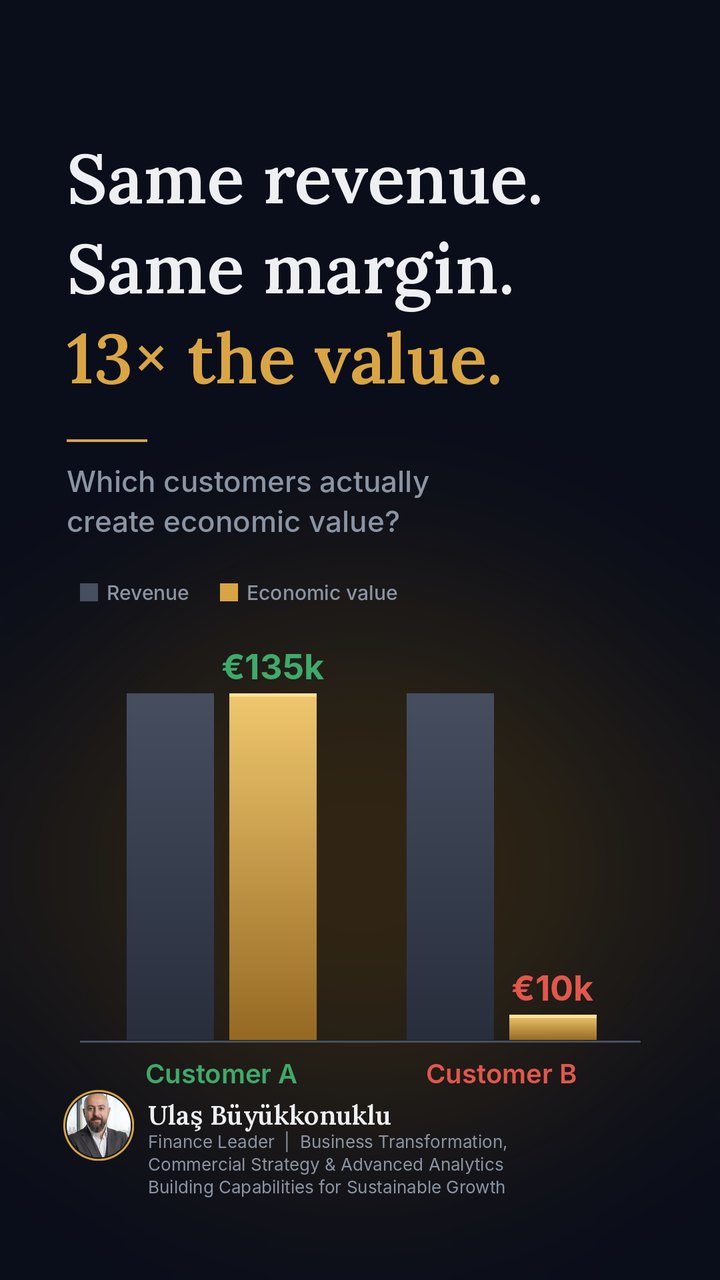
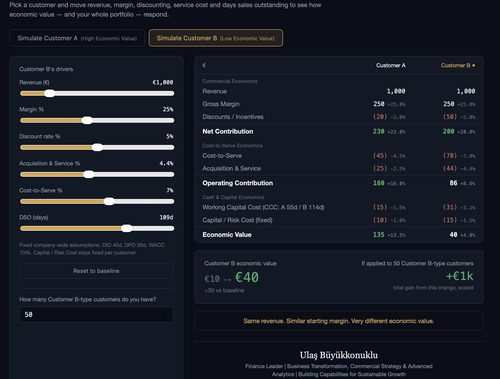
Two customers can generate similar revenue and similar margins — while creating very different economic outcomes.
Why?
Because the economics behind the revenue can be very different.
Pricing and discounts.
Cost-to-serve.
Payment terms.
Working capital requirements.
Acquisition and retention costs.
Capital intensity.
Once these dimensions are considered, the picture can change significantly.
A high-revenue customer may consume substantial resources and capital.
A smaller customer may generate less revenue, but convert much more efficiently into sustainable economic value.
And this is where Finance and Revenue Management come together.
If customers create different economic value, should they all receive the same pricing, terms and service model?
That is where customer economics should start influencing commercial decisions.
Understanding customer economics should influence how we segment customers, allocate resources, design service models, structure commercial terms and make pricing decisions.
The question is therefore not simply:
“Which customers generate the most revenue?”
Or even:
“Which customers generate the highest margin?”
The better question is:
“Which customers create the most sustainable economic value?”