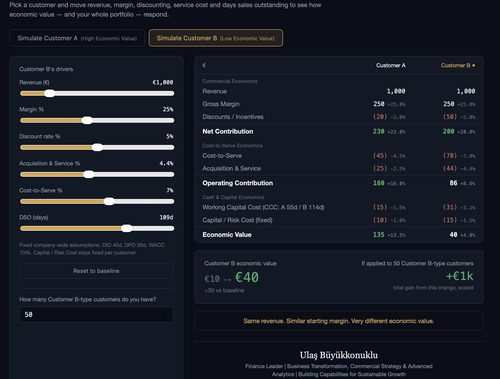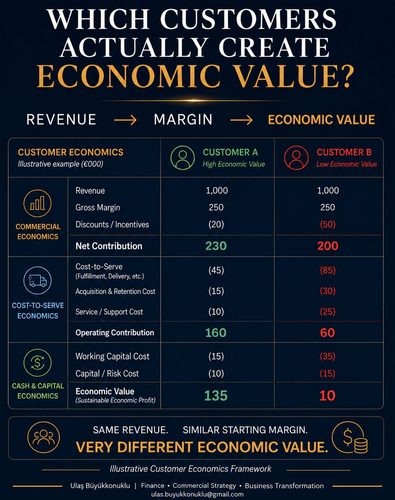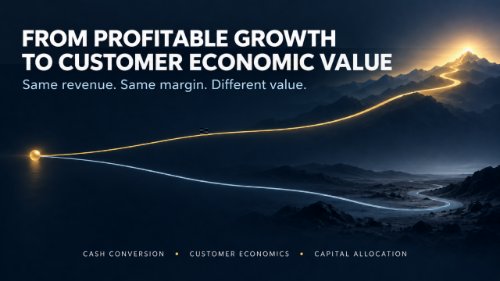
Two customers. Same revenue. Same starting margin. One created substantial economic value. The other barely did.
In my previous post, I shared a static comparison showing why revenue and margin alone don’t tell the full customer story.
This time, I used AI to turn that framework into an interactive financial simulator.
You can change revenue, margin, discounts, service costs and collection days — and see economic value respond in real time.
Then scale the impact across 50 similar customers, or adjust the customer count to explore a different scenario.
What happens if we reduce discounting?
Collect payments sooner?
Change how we serve a customer?
Instead of looking at one answer, you can explore the assumptions that shape it.
For me, this is a practical example of AI in finance: helping turn a financial concept into a working tool that makes commercial trade-offs visible and easier to discuss.
AI helped me build the simulator. The results follow the model’s formulas and assumptions. Their relevance still depends on the quality of the data and the judgment applied.
The model is illustrative, but the questions behind it are real.
That is increasingly part of the CFO’s role: creating the tools and processes that help the business ask better questions, test alternatives and make informed decisions faster.
Try it yourself — the simulator is linked below.
Which financial decision would you turn into an interactive simulation?
Want the Excel version of the simulation? Comment “Excel Model” on the LinkedIn post and I’ll send it to you so you can adapt it to your own customers.